


Juror Expectations in Employer-Driver Cases: When Corporate Presence Influences the Decision
Cases against employers and drivers tend to arrive in court with more context than the mere facts of an individual crash. They pack along a bundle of assumptions about how businesses should operate, how much control they should have over their employees, and what liability they ought to assume when something bad happens. Recent jury surveys underscore the power of the assumptions. Long before they start weighing things such as medical records or accident reconstruction, many jurors are already establishing, on a moral level, what role a company should play in the story.
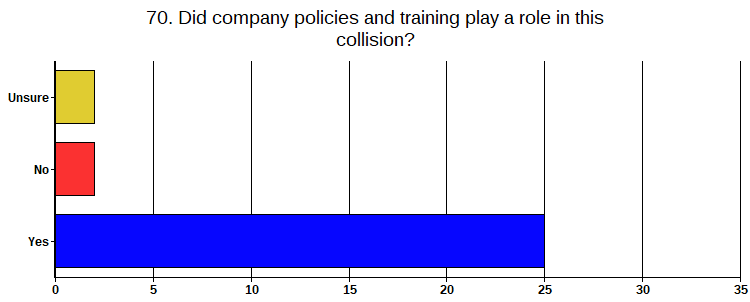
Jurors usually concentrate on what transpired at the time in a traffic case involving two people. Who was in the right-of-way? What was seen by whom? Who reacted in time? When an employer is added to the mix, the frame often widens. The incident becomes not just a question of driving behavior but a broader inquiry into corporate oversight, safety culture, and whether the organization “did enough.” That shift can happen even when the evidence presented about hiring, training, and supervision is limited or neutral.
This tendency isn’t a product of hostility to business. It stems from everyday experience. Jurors encounter organizations as consumers, employees, and members of the public. They know companies set rules, provide training, and create systems.
- "They failed to enforce their safety policy." - Juror comment
When a worker has an accident, it feels intuitive to look past the individual and ask what the background system looked like. The hazard for the defense is that this intuition slips into a proxy for proof. What a juror thinks a company ought to have done quietly substitutes for what the law requires or the record shows.
One area where this is particularly apparent is in the area of health and fitness for duty. Jurors routinely assume that an employer has broad authority, and perhaps even a responsibility, to know everything about an employee’s medical status or medication usage before putting them behind the wheel. That common-sense assumption may be at odds with privacy protections, regulatory limits, and common industry practice. Without explanation, jurors might hold companies to personal standards instead of legal ones, treating any lack of inquiry as a lapse even where no such investigation is required, or even permitted, by rule or policy.
- "They are responsible for their drivers, and negligent by allowing someone on the road under influence.” - Juror comment
These expectations often flow into the way damages are viewed. When a company is the one being named in a lawsuit, then compensation starts to feel more like a way to “send a message,” rather than a way to encompass loss. Potential jurors may be heard talking about fairness in terms of what a business can afford or what might encourage change, rather than in more grounded terms like medical bills, wage records, and documented future care. For defense counsel, that creates the risk that the size or the identity of the defendant will serve as a sort of unsaid factor in valuation. At the same time, jury research shows not all fact finders are “wired” that way. Some tend to prefer a more organized analysis. They ask, what is in the record? They want to see timelines, benchmark comparisons, and objective measures. They want to know how does earlier treatment compare to later treatment, what does work history show in comparison to claimed limitations, and are the medical opinions backed up by imaging and consistent documentation. These jurors tend to be less subject to the effects of the overarching stories about varying degrees of corporate responsibility, but more affected by how independently-supported the individual claims are.
The defense can reinforce that instinct with a plan that gives jurors a roadmap of how to reach their decision. Instead of asking jurors to juggle any number of questions at the same time, it can be useful to approach the case as a series. Start with the driver’s conduct at the time of the event. What was visible. What options were open? What standard of care applies? Then, go to the organization’s conduct. Were there policies in place? Were they in conformance with known practices? Is there evidence of any gap between expectation and practice? Only when those questions are answered do we begin to address injury, causation, and damages.
Experts are the critical players in this system. A jury is often inclined to trust a medical professional, especially one who has had the opportunity to treat a plaintiff. That trust can work both ways. Oftentimes, it can work in the way of helping the plaintiff more than the data would allow. A physician who is talking about a surgery or future care, for example, can sound very definitive in jurors’ ears, even if the testimony contains hedges regarding alternative causes, degenerative changes, or the absence of early records. The defense objective is not to denigrate expertise, but to emphasize the process that lies behind it. How did the expert arrive at this opinion? What records were consulted? What assumptions were made? What additional records would strengthen or weaken the conclusion?
Visual tools can also facilitate this analytic focus. A simple timeline comparing the incident to medical appointments, imaging results, work events, and treatment decisions can help jurors to see the trajectory rather than just the upshot. Months or years arrayed in black and white make it easier to argue about what happened within the penumbra of the event, and what happened after. Combined with a simple chart tying each element of damages to some concrete piece of documentation, it can further anchor the discussion in the record.
The overall lesson is that corporate presence is itself a powerful narrative element. It can draw attention away from individual actions and toward questions of system and culture, even in cases where the evidence does not point to a systemic failure. For the defense, success often depends on recognizing that dynamic early and addressing it directly, not defensively, but through education.
When jurors are given a way to separate what feels fair from what is actually proven, they are better positioned to apply the standards they are asked to use. Reasonableness, proportionality, and evidence-based decision-making are not abstract concepts. They become practical tools when tied to a clear method for evaluating conduct, policies, and claimed losses.
Employer-driver cases will always exist in the intersection between custom and identity on one hand, and individual behavior and organizational identity on the other. The task of the defense is to ensure that identity does not substitute for evidence. In walking jurors through a deliberate consideration of what happened, what systems were in place, and what the record supports on the question of harm and compensation, counsel can help ensure verdicts based on proof rather than presumption.
Recent Articles by Our First Court Team:





Comments